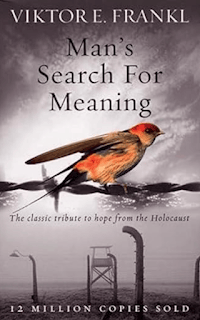
Reading Man’s Search for Meaning felt like stepping into a world where humanity was stripped down to its barest essence. Viktor Frankl recounts his time in Nazi concentration camps in Austria; places where prisoners lost their names and became numbers, where death loomed in gas chambers and starvation, and where each day was a question mark wrapped in suffering.
What struck me most wasn’t just the horror of it all (though that’s impossible to ignore), but how Frankl observed something profound amid the despair: the people who survived weren’t always the strongest or healthiest, they were the ones who still had a reason to live. He describes inmates who, once they lost hope, simply gave up, lying in their own filth, waiting for death. One story that haunted me was about his friend who dreamed their liberation would come on a specific date. When that day arrived and freedom didn’t, he died that very night.
Frankl argues that meaning can be found in three ways: through love and experience (like relationships or beauty), through creating something meaningful (a work or deed), and even in suffering, by choosing your response to it. That last idea changed how I think about hardship. It’s not about denying pain, but about asking, “What can this teach me? What can I still choose?”
Honestly, I went into this book expecting a historical account. I left it with a new lens on resilience. It didn’t just inform me, it moved me. And that’s why I’d call it truly enlightening.
The book is so good it’s already on my reading list; for a third time since I encountered it- absolute 10/10!


Leave a Reply